

A wheelchair for varying surfaces does exist, but you’ll quickly find yourself looking at a different type than the standard manual or transport wheelchair. As soon as you alternate between tiles, bricks, gravel, forest paths, and a bit of grass, it’s mainly wheel size, tire type, stability, and drive system that determine whether you keep driving relaxed or have to correct constantly.
By “varying surfaces,” most people mean: short transitions (curbs, thresholds, shell paths), sections that are loose or bumpy (gravel, pebbles, roots), and situations where you sometimes want to move yourself and sometimes receive help.
What to look out for when the surface keeps changing
Front wheels that don’t dig in make all the difference. Small caster wheels are fine on smooth asphalt, but can ‘bite’ or wobble on gravel or poorly laid bricks. Larger front wheels or an attachment/adjustment that makes the front lighter provides smoother steering.
Tire choice is less sexy, but decisive. Pneumatic tires provide cushioning and grip on variable terrain, but require maintenance (pressure). Solid tires are low-maintenance but stiffer on bumpy sections. If you often switch between indoors and outdoors, you’ll notice that comfort immediately.
Track width and tilt stability determine how confident you feel on slopes, curbs, and uneven tiles. A narrow wheelchair can be handy indoors, but may feel rather nervous outdoors. On varying surfaces, you want predictability, not surprises.
Drive and load: if you propel yourself, rolling resistance adds up extra fast as soon as things get rougher. If you’re often pushed, you’ll look more at pushing comfort and getting over thresholds without the attendant having to pull and lift.
If you’re mainly doubting whether a balance wheelchair suits you at all, take a look at the explanation of what a balance wheelchair is suitable for. That helps you choose the right category before you start comparing models.
Top 5 wheelchair options for varying surfaces (and what they actually offer you)
1. Balance wheelchair (manual, active outdoors)
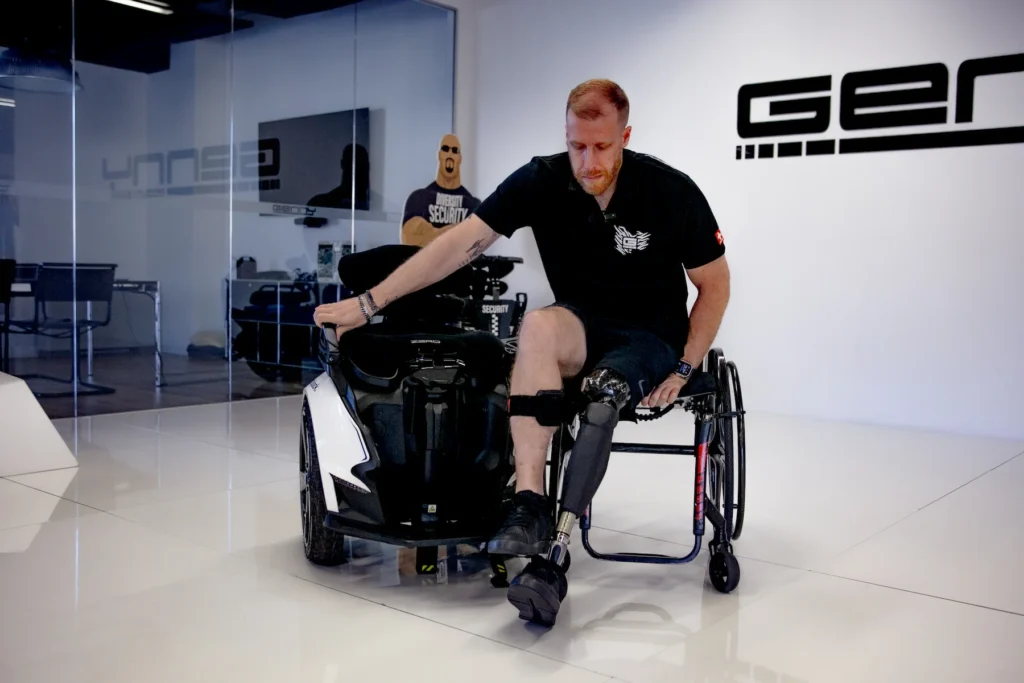
The balance wheelchair is often the most logical choice if you want to stay active yourself and your routes vary: city, park, nature path, and the occasional unpaved section. Due to the balance and wheel setup, you can approach thresholds and bumps differently than with a classic wheelchair, making transitions less “stop-start.”
What to compare: how stable it feels when driving slowly, how easily you take a short transition (edge/ledge), and whether you can maintain the seating position for a long time.
Indicative price: usually in the higher segment (often several thousand euros, depending on version and customization).
2. Active wheelchair with off-road front wheel (attachment/third wheel)
If you have or want an active wheelchair, a front-wheel attachment can be a practical bridge between “asphalt only” and “gravel/shells too.” You essentially lift the casters out of trouble, so you’re less likely to get stuck and can steer more smoothly.
This is especially interesting if your distances aren’t extreme, but you regularly encounter short rough patches (from parking lot to path, through a park, event grounds).
Indicative price: lower than a complete off-road solution; count roughly from a few hundred to over a thousand euros, depending on brand and coupling system.
3. Wheelchair with larger front wheels or “semi-terrain” configuration
Some (manual) wheelchairs can be configured with larger front wheels, adapted forks, and tires that provide more cushioning. It sounds like a small change, but on bad bricks or light unpaved ground, it saves you from constant correcting.
This is a down-to-earth option if you’re mostly in the city but don’t want to detour every time the road surface gets worse.
Indicative price: highly dependent on base chair and options; often mid-segment to upper-middle.
4. Electric wheelchair with larger tires and suspension (for comfort on variation)
If your energy budget is limited, varying surfaces quickly become “too much” in a manual chair. In that case, an electric wheelchair with suitable tires and (preferably) suspension is a more realistic comparison. The gain is less about rugged terrain and more about staying comfortable and in control on varying sections.
Pay close attention to turning radius and total width: some models do everything better outdoors but become clumsy indoors. That’s not a detail; it determines whether you’ll use it daily.
Indicative price: usually higher (often several thousand euros, increasing with options/battery).
5. Off-road/terrain chair (truly unpaved, less all-round)
For those who regularly want to go truly rugged: loose sand paths, forests with roots, muddy sections. For this, there are terrain-oriented solutions with thick tires and robust geometry. The downside: they are often larger, heavier, and less practical for “just popping into town.”
Only compare this type if your use is primarily outdoors and unpaved. Different requirements apply for beach use; that topic is covered separately on the page about a wheelchair for the beach.
Indicative price: usually mid to high, depending on how specialized the model is.
Availability: buy, rent, or try first
In practice, wheelchairs for varying surfaces aren’t usually something you just “pick off the shelf.” You want to feel what happens on your thresholds, your sidewalks, your paths. That’s why a test drive is almost always the shortest route to a good choice.
Over de Maes Mobility works as a specialist in balance wheelchairs and schedules appointments for personal advice and fitting. Test drives can often take place on-site, so you don’t decide in a showroom but on the surfaces that matter. This is especially useful if you’re torn between an active (manual) solution and a balance wheelchair.
Renting can be interesting if you want to test it for vacations or days out, or if you first want to experience whether your routes become feasible without buying immediately. For that scenario, it’s useful to also look at wheelchairs for vacations and days out, as rental terms and practical use (transport, range, disassembly) carry more weight then.
Prices: where the difference usually comes from
The price difference is rarely in “a better chair” as a whole, but in components that specifically help with variable surfaces: wheelset/tires, stability, seating positioning, cushioning/suspension, and whether everything is properly adjusted to your body and driving style. A cheaper model that constantly throws you off balance ultimately costs energy, shoulders, and enjoyment.
If you mainly deal with lots of bumps and bad road surfaces, a comparison with wheelchairs for bumpy roads is logical, as comfort and control are detailed even more specifically there.
Quick choice helper: which of the 5 fits your situation?
- You want to drive actively yourself and regularly encounter varying outdoor routes: look first at a balance wheelchair or an active wheelchair with an off-road front wheel.
- You just need something “a bit more robust” for city + park: a semi-terrain configuration might be enough.
- Your energy or strength is the limiting factor: compare electric models with suitable tires/suspension.
- You’re intentionally going for truly unpaved: consider a terrain chair, but accept the lower all-round usability.
Frequently asked questions about wheelchairs for varying surfaces