

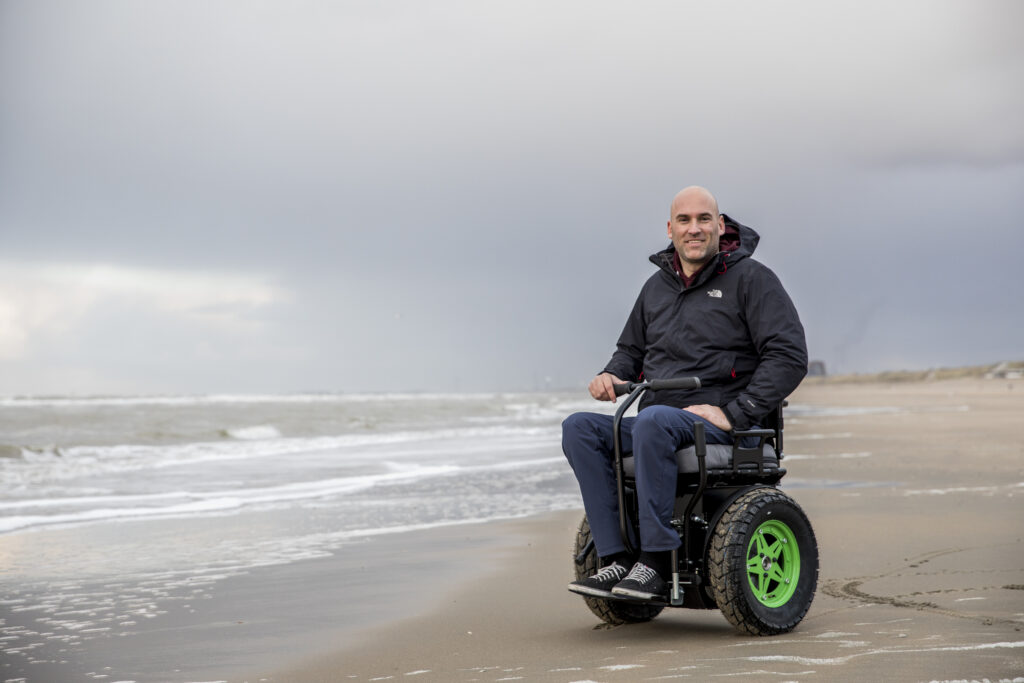
Bumpy roads are treacherous: one moment you’re being rattled around, the next your front wheel is slipping on loose pebbles. You can almost always recognize a wheelchair that handles them well by the same basics: wide tires with grip, real suspension or flex in the frame, sufficient “roll-over capacity,” and a seat that doesn’t push you out of balance with every bump.
Where wheelchairs struggle on bumpy roads
Most standard (indoor) wheelchairs have small front wheels, hard tires, and a rigid frame. On cobblestones, poor asphalt, and gravel, this leads to three problems: front wheels getting stuck, vibrations going straight to your back, and a loss of directional stability. This isn’t just uncomfortable; it also makes you more dependent because you have to get off or ask for help sooner.
What to look for when comparing wheelchairs for bumpy roads
You can compare five models side by side, but if you don’t look at the right features, everything seems “just okay.” In practice, these specifications make all the difference.
Tires: pneumatic, tread, and width
Pneumatic tires provide natural cushioning and maintain grip on uneven surfaces. Solid tires are low-maintenance but transmit more impact. Tread and tire width determine whether you stay on track or slide on loose gravel.
Wheel size and “angle of attack”
Larger wheels roll more easily over ridges, cracks in the asphalt, and large pebbles. Especially the combination of larger (front) wheels with stable geometry prevents you from constantly “falling into” a bump.
Suspension, frame flex, and seat cushioning
Some wheelchairs have real suspension on the wheels, while others use flex in the frame or cushioning seat components. On bumpy roads, you want the impact to be filtered out before it reaches your lower back and shoulders.
Stability: track width, center of gravity, and tilt tendency
If a wheelchair is set up narrow and high, every cross-ridge feels like you’re being “pushed aside.” A more stable track, a good center of gravity, and appropriate back/side supports mean you have to compensate less with your torso.
Drive and brakes (for electric models)
For electric models, low-speed torque, traction control, and predictable braking on bumps are what matter most. A wheelchair that’s fine on flat asphalt might accelerate jerkily or brake abruptly on cobblestones.
Top 5 wheelchairs for bumpy roads (and who they work best for)
1. Balance wheelchair with suspension and off-road tires (best all-rounder for bumps)
If you mainly want to get back outside and your current mobility aid feels “too fragile” on poor roads, a balance wheelchair is often the best match. Due to the balanced position and larger wheels, you ride more smoothly over uneven surfaces, and the combination of suspension and wide tires makes all the difference on cobblestones and broken asphalt.
A great fit if you want to move independently outdoors but need comfort and confidence. In situations where you also encounter many varying surfaces (from asphalt to gravel and back), this aligns with what we explain separately regarding wheelchairs for varying surfaces.
2. Electric (outdoor) wheelchair with independent wheel suspension (comfort champion)
Do you mainly want to “filter out” bumps because you quickly suffer from back or neck pain or fatigue? Then an electric wheelchair with real wheel suspension is a strong candidate. You’ll notice it on cobblestones and poor asphalt: fewer vibrations, less correcting, and less impact on your body.
Pay extra attention here to the tire type (preferably pneumatic with tread), ground clearance, and how the chair behaves at low speeds on bouncy surfaces. For longer trips, it’s not just suspension that matters, but also pressure distribution and posture; that topic relates to outdoor use with extra comfort.
3. Outdoor manual wheelchair with larger front wheels and pneumatic tires (light and direct)
If you want to keep self-propelling and are looking for something that doesn’t immediately become heavy and bulky, look into an outdoor-oriented manual wheelchair. The key difference is often in the larger front wheels (less “snagging”), pneumatic tires, and a frame that doesn’t transmit every shock.
Practical check: can you safely maintain your course with one hand on the wheel if the other hand needs to make a correction? On bumpy paths, you’re constantly making micro-adjustments.
4. Three-wheel (trike) outdoor wheelchair or add-on solution (stable in a straight line, less ideal in tight spaces)
A single front-wheel solution can roll surprisingly smoothly on bumpy sections because you’re less bothered by two small caster wheels each picking their own bump. In a straight line, this often feels stable and “easier over edges.”
The downside is maneuverability: on narrow sidewalks, sharp turns, or busy shopping streets, you’ll want to test thoroughly if you can manage. If your routes are mainly recreational (parks, paths, boulevards), this links to wheelchairs for recreational outdoor use.
5. Robust transport/push wheelchair with cushioning tires (only if you are usually accompanied)
Are you often pushed, and is “the occasional bumpy stretch” the problem rather than your full independent mobility? Then a more robust push wheelchair with softer (preferably pneumatic) tires could be a practical choice. Don’t expect off-road performance, but you will gain stability and comfort compared to a standard indoor model.
Don’t buy one that’s too lightweight: on cobblestones, you’ll immediately notice if the frame experiences torsion or if the chair starts to rattle.
Which of these is usually the most suitable?
If bumpy roads are a recurring part of your route, the balance wheelchair with suspension and off-road tires often emerges as the best overall solution in practice: stable, comfortable, and built for the outdoors. An electric wheelchair with independent suspension is the alternative if you are particularly sensitive to vibrations or want to save energy.
Quick reality check: test these before you choose
- Deliberately ride over a stretch of cobblestones: does your upper body stay still, or do you feel “jolts” in your back?
- Take a cross-ridge at an angle: do you feel a tendency to tilt, or does the chair remain predictable?
- Try accelerating and braking slowly on uneven ground (especially with electric models): does it stay smooth?
- Watch your hands/shoulders (manual): how much correction work are you doing every 50 meters?
Are you torn between a mobility scooter, an electric wheelchair, and a balance wheelchair because you mainly want to be able to ride outdoors again? Then it helps to first get a clear picture of what a balance wheelchair is and isn’t suitable for; that’s explained separately under what a balance wheelchair is suitable for.
Frequently asked questions about wheelchairs for bumpy roads