

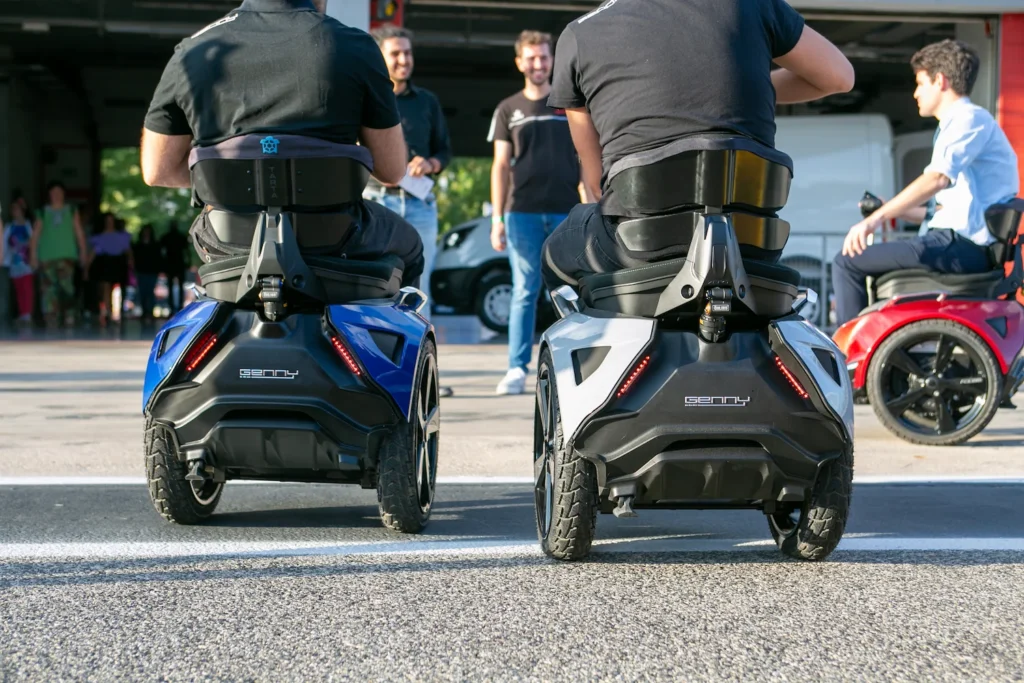
Recreational outdoor use sounds simple, but it really puts a wheelchair to the test: uneven paving stones, gravel on a park path, a slope at a small bridge, or a threshold at a terrace. You aren’t just looking for “the best wheelchair,” but a type that fits your outdoor lifestyle: independent or with pushing assistance, short rounds or entire afternoons, mainly paved or also semi-paved.
Top 5 wheelchairs for recreational outdoor use (and who they make sense for)
1. Lightweight manual wheelchair (active model)
This is the most popular choice if you want to drive yourself on paved terrain: shopping areas, boulevards, bike paths, and well-maintained park paths. The advantage lies in the low weight and direct steering; you don’t feel like you’re “fighting” the wheelchair.
What to look for if you want to go outside:
- Wheels and tires: slightly wider tires and sufficient tread provide noticeably more stability on bricks and rough tiles.
- Frame and seating position: an active seat (proper adjustment of seat depth/height) saves energy; you’ll notice that immediately outdoors.
- Brakes and stability: brakes must be strong enough on a slight slope at a driveway or bridge.
Price indication: roughly €1,000–€3,500, depending on material (aluminum/titanium), adjustability, and wheels.
User experience in practice: people appreciate the “walking pace” you set yourself and how easy it is to take in the car. The limit is often reached on longer stretches of rough terrain: that’s when hands and shoulders become the limiting factor.
2. Balance wheelchair (for active outdoors, stability, and terrain that is just a bit too rough)
If recreational outdoor use for you means park paths with roots, unpaved nature areas, shell paths, or long stretches where you don’t want to be constantly correcting, then a balance wheelchair is a serious candidate. The driving feel is different from a classic wheelchair: you sit in balance and steer with subtle weight shifts, with a chassis designed to handle bumps.
What you should really compare here:
- Stability on uneven ground: how does it behave with potholes, slopes, and bumpy paths?
- Comfort over distance: damping, posture, and “calmness” while driving are often decisive for recreation.
- Transfer and ease of use: getting in, turning in tight spaces, and what feels logical to you in daily use.
Price indication: usually in the higher segment (often €10,000+), with variation per version and customizations.
User experience: what often comes up is the confidence on outdoor routes that used to be a “hassle,” and the feeling that you can keep up in terms of pace and distance. The downside: this is not an impulse buy. You’ll want to do a test drive and have it properly adjusted, otherwise you’ll miss the exact benefits you’re considering it for.
If your recreation mainly consists of nature areas or paths with many bumps, then the surface and shock load play a bigger role than during a trip through the city. In that case, also read the separate explanation about a wheelchair for nature areas or about wheelchairs for bumpy roads.
3. Comfort wheelchair (manual, focused on posture and damping)
If you want to go outside but quickly suffer from pain, fatigue, or an unstable torso, comfort is sometimes more important than sporty driving. This type is also chosen if someone is regularly pushed but still wants comfortable days out.
Typical features that make a difference outdoors:
- Pressure distribution and support: better seat and back support helps during longer outings.
- Adjustment options: tilt or back adjustment can make rest moments possible without having to get “out of the wheelchair.”
- Larger rear wheels: often provide smoother rolling behavior on uneven surfaces than small wheels.
Price indication: often €2,000–€6,000, heavily dependent on options and seating system.
User experience: the comfort is a relief on bumpy sections and during longer days, but the whole unit is usually heavier and less compact to transport. If you mainly want to drive actively yourself, this type can sometimes feel “clunky.”
4. Electric wheelchair (compact, for independent recreation with range)
If you want to go outside independently without your arms being the limiting factor, you’ll quickly end up with an electric model. This is interesting for longer distances, varying energy levels throughout the day, or if you regularly face wind or slopes.
Compare mainly on these points (recreational outdoor):
- Range: not just the manufacturer’s specs; ask about realistic use with cold, wind, and slight slopes.
- Tire type and ground clearance: determine if a gravel path or a bad sidewalk is “doable” without shocks.
- Turning radius: less critical outdoors, but important for terraces, toilets, and shops during your day out.
- Transport: does it fit in your car, or do you need a lift/tow bar carrier?
Price indication: often €3,000–€12,000+ (compact models lower, heavier or more suspended models higher).
User experience: freedom and range are mentioned most. At the same time: weight and transport often become the “hidden costs” (storage, lifting, carrier, charging).
If you’re mainly unsure because your routes have different surfaces (sidewalk, park path, bits of gravel), take a separate look at how that affects grip and comfort; that topic is detailed on our page about wheelchairs for varying surfaces.
5. Power-assist (push assistance on a manual wheelchair)
This is the middle ground that many people only discover late: you stay in a manual wheelchair but get electric assistance when pushing or at the wheels. Handy if you want to stay active but need that extra margin outdoors for bridges, headwinds, longer paths, or a bad day.
When this type often “clicks” best for recreation:
- You want to keep driving yourself, but your shoulders/hands get overloaded quickly.
- You switch between short trips and longer outings without wanting to go fully electric right away.
- You want a solution that is usually easier to transport than a heavy electric wheelchair (depending on the system).
Price indication: roughly €2,500–€8,000 extra, depending on the type of assistance and battery.
User experience: people often mention that thresholds and slopes “suddenly become possible.” Disadvantage: you’re adding technology (charging batteries, settings, maintenance) and not every system feels equally natural in turns or when maneuvering slowly.
How to choose without regrets: three questions that make the difference
Do you mostly drive yourself, or are you often pushed?
If you mostly drive yourself, weight, seating posture, and rolling resistance quickly become more important than luxury options. If you’re often pushed, then brakes, push handles, stability, and comfort carry more weight. Many people fall somewhere in between; in that case, power-assist is often the most efficient comparison.
What is your “recreational” route in reality?
A round through the village with terraces requires something different than a park with gravel paths, and that’s different again from a day out with varying surfaces. Be specific: how many meters is the worst section? How often do you encounter a slope or threshold? That one difficult part often determines which type of wheelchair you’ll ultimately enjoy.
Is transport part of your freedom?
If your wheelchair needs to go in the car, weight and foldability sometimes dictate the choice, even if a heavier model drives better. For electric models, be honest: where do you charge, how do you lift it, and who does what when you go out together?
When a test drive tells you more than specifications
With recreational outdoor use, you quickly reach the limit of “fine on paper” and “annoying in real life.” A test drive is especially useful if you’re torn between:
- active manual versus power-assist
- compact electric versus something more robust with more comfort on uneven paths
- electric versus balance wheelchair for unpaved and longer outdoor routes
Over de Maes Mobility specializes in balance wheelchairs and uses test drives and adjustments to determine if such a model will really make a difference for your recreational outdoor life. Sometimes the answer is actually: don’t do it, and choose something lighter or electric. That honesty saves a lot of bad purchases.
Frequently asked questions about wheelchairs for recreational outdoor use