

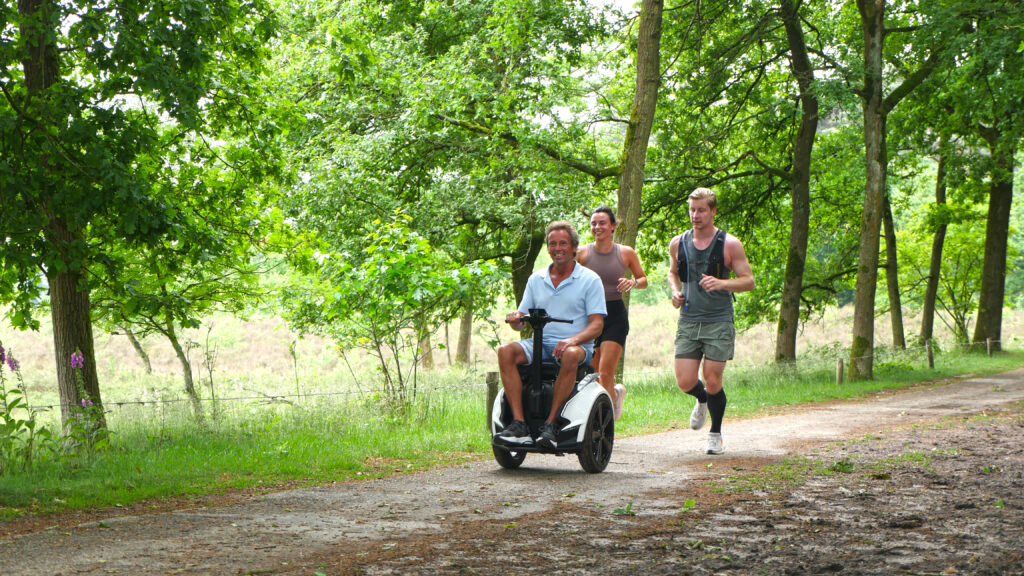
Is a balance wheelchair covered by the Wmo?
The short answer is yes, a balance wheelchair like the Genny and the Hoss can be reimbursed through the Social Support Act (Wmo), but this is not automatic. Below you can read how to properly handle the application.
Applying for a PGB wheelchair via the Wmo: how to get it right
Do you need a (balance) wheelchair and want to decide for yourself which model best fits your situation? Then you can apply for a wheelchair through the municipality via a Personal Budget (PGB). With a PGB, you choose your own supplier and balance wheelchair, instead of receiving a standard provision through care in kind.
Here you can read step-by-step how applying for a PGB for a balance wheelchair via the Wmo works, and how to increase your chances of approval.
1. Prepare well for your Wmo application
Good preparation makes all the difference. Research in advance:
- Which type of (balance) wheelchair fits your situation?
- Which functionalities are necessary?
- What do you need to continue participating independently in daily life?
If necessary, consult with an occupational therapist, an independent client supporter, or someone from Over de Maes Mobility. We can help support your application.
2. Clearly map out your personal situation
During the Wmo procedure, the municipality looks at your self-reliance and participation. Therefore, describe concretely:
- What is currently not going well?
- What do you encounter on a daily basis?
- Why is a specific balance wheelchair necessary?
The more concrete your explanation, the stronger your application.
3. Create a well-founded list of requirements for your wheelchair
A standard wheelchair does not always meet individual needs. Therefore, draw up an overview with:
- Sitting and positioning needs
- Indoor and/or outdoor use
- Electric, manual, or with balance technology
- Foldability or transport options
- Future adaptability
This helps to substantiate why a PGB is more appropriate for you than care in kind.
4. Explicitly state to the municipality that you want a PGB
When you contact your municipality’s Wmo desk, state immediately that you are choosing a PGB instead of care in kind.
During the “kitchen table conversation,” you will discuss your situation with a Wmo consultant. Calmly explain why choosing for yourself is important to you, for example, because of specific adjustments or the expertise of a particular supplier.
5. Request a clear and specified quote
The municipality usually asks for a quote for the (balance) wheelchair you want to purchase. Ensure that this quote:
- Is fully specified
- Includes maintenance and service
- Mentions any future adjustments
Sometimes you need to provide multiple quotes. Check this carefully with your municipality.
6. Check the interview report carefully
After the kitchen table conversation, you will often receive a report. Read this critically. Are your request for help and motivation correct? Is anything important missing? Respond promptly to avoid delays.
7. Be prepared for questions or additions
A PGB application for a wheelchair sometimes requires extra substantiation. Stay calm and provide requested documents in full. Good documentation increases your chance of a positive decision.
8. Think ahead with your application
A wheelchair is often granted for several years. Therefore, also consider:
- Changing health
- Growth (in children)
- Future mobility needs
A future-oriented application prevents you from having to go through the process again quickly. If you have questions following this article, feel free to contact us without obligation.